# react-three-csg
**Repository Path**: liangty/react-three-csg
## Basic Information
- **Project Name**: react-three-csg
- **Description**: No description available
- **Primary Language**: Unknown
- **License**: MIT
- **Default Branch**: main
- **Homepage**: None
- **GVP Project**: No
## Statistics
- **Stars**: 0
- **Forks**: 0
- **Created**: 2024-06-26
- **Last Updated**: 2024-06-26
## Categories & Tags
**Categories**: Uncategorized
**Tags**: None
## README
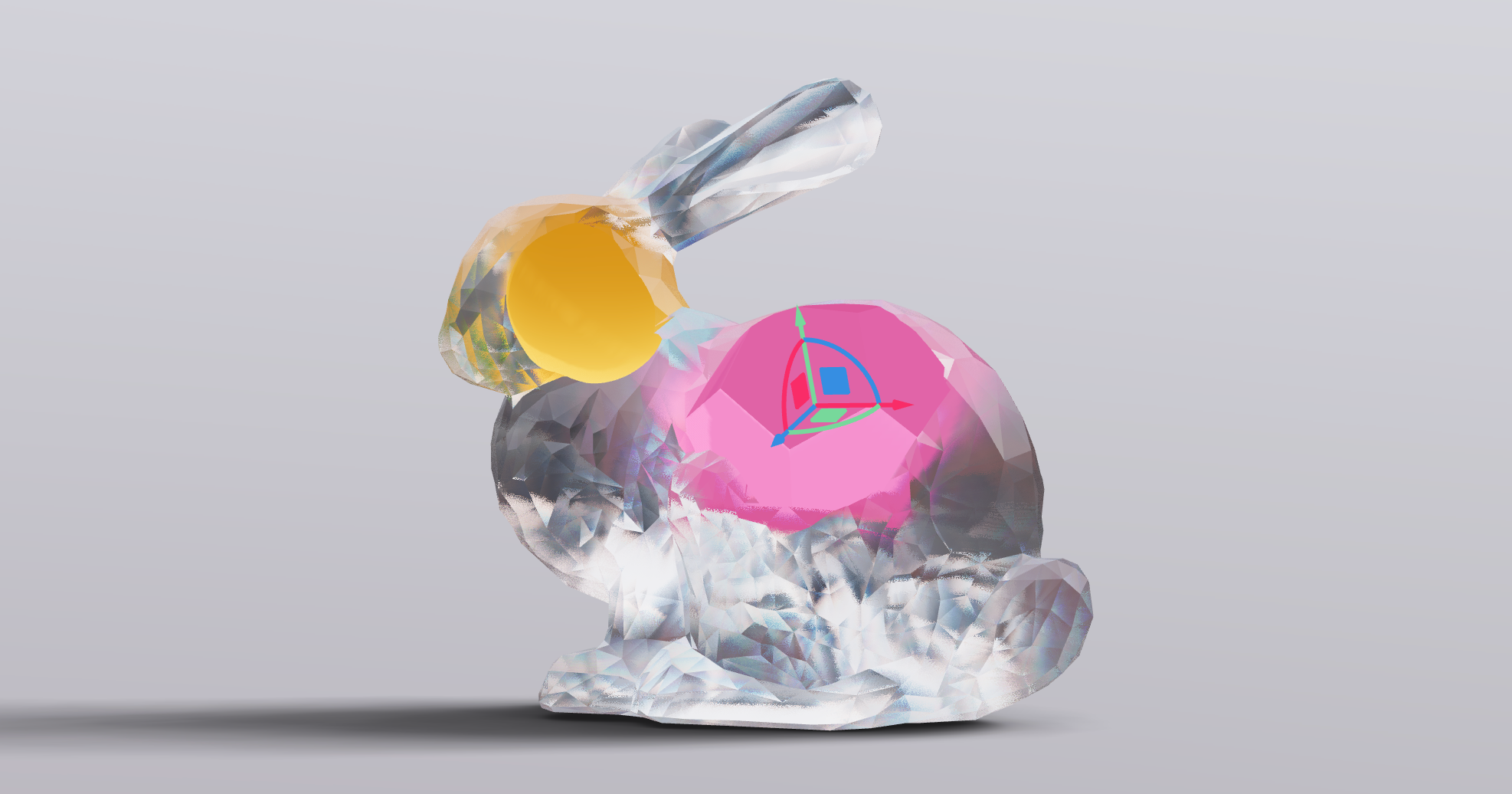



```shell
yarn add @react-three/csg
```
Constructive solid geometry for React, a small abstraction around [gkjohnson/three-bvh-csg](https://github.com/gkjohnson/three-bvh-csg).
Begin with a `Geometry` which is a regular `THREE.BufferGeometry` that you can pair with a `mesh`, or anything else that relies on geometry (physics rigid bodies etc).
```jsx
import { Geometry, Base, Addition, Subtraction, ReverseSubtraction, Intersection, Difference } from '@react-three/csg'
function Cross() {
return (
```
You must first give it a `Base` which is the geometry foundation for all ensuing operations. All operations within `Geometry`, including `Base`, behave like regular meshes. They all receive geometry (and optionally a material, see [using-multi-material-groups](#using-multi-material-groups)), you can also nest, group and transform them.
```jsx
```
Now you chain your operations, as many as you like, but keep in mind that order matters. The following operations are available:
- `Addition` adds the geometry to the previous
- `Subtraction` subtracts the geometry from the previous
- `ReverseSubtraction` subtracts the previous geometry from the geometry
- `Intersection` is the overlap between the geometry and the previous
- `Difference` is the negative overlap between the geometry and the previous
```jsx
)
}
```
#### A more complex example
```jsx
import * as CSG from '@react-three/csg'
function Shape() {
return (
{/** This will yield a regular THREE.BufferGeometry which needs to be paired with a mesh. */}
{/** The chain begins with a base geometry, where all operations are carried out on. */}
{/** Chain your boolean operations: Addition, Subtraction, Difference and Intersection. */}
{/** Geometry can be set by prop or by child, just like any regular . */}
{/** Geometry is re-usable, form hierachies with previously created CSG geometries. */}
{/** Combining two boxes into a cross */}
{/** You can deeply nest operations. */}
)
}
```
#### Updating the operations and runtime usage
Call `update()` on the main geometry to re-create it. Keep in mind that although the base CSG implementation is fast, this is something you may want to avoid doing often or runtime, depending on the complexity of your geometry.
The following would allow the user to move a cutter around with the mouse.
```jsx
import { PivotControls } from '@react-three/drei'
function Shape() {
const csg = useRef()
return (
csg.current.update()}>
```
#### Using the context API
The `useCSG` hook exposes the `update` function, which can be used to update the geometry. This is useful when you want to update the geometry from a child component.
```jsx
const Shape = () => (
function Cutter() {
const { update } = useCSG()
return (
```
#### Using multi-material groups
With the `useGroups` prop you can instruct CSG to generate material groups. Thereby instead of ending up with a single clump of uniformly textured geometry you can, for instance, make cuts with different materials. Each operation now takes its own material! The resulting material group will be inserted into the mesh that carries the output operation.
```jsx
function Shape() {
return (
{/** The base material. Again it can be defined by prop or by child. */}
{/** This cut-out will be blue. */ }
{/** etc. */}
```
#### Showing the operations
The following will make all operations visible.
```jsx
function Shape() {
return (
```
Whereas if you want to show only a single operation, you can do so by setting the `showOperation` prop on the root.
```jsx
function Shape() {
return (
```
### API Types
```tsx
export type CSGGeometryProps = {
children?: React.ReactNode
/** Use material groups, each operation can have its own material, default: false */
useGroups?: boolean
/** Show operation meshes, default: false */
showOperations?: boolean
/** Re-compute vertx normals, default: false */
computeVertexNormals?: boolean
}
export type CSGGeometryApi = {
computeVertexNormals: boolean
showOperations: boolean
useGroups: boolean
update: () => void
}
export type CSGGeometryRef = CSGGeometryApi & {
geometry: THREE.BufferGeometry
operations: THREE.Group
}
```